
The Supreme Court has adjourned pleas challenging the appointments of the chief election commissioner (CEC) and election commissioners (ECs) under the 2023 law. The court indicated the matter would be listed after the Holi festival break due to a paucity of time. Petitioners, including the NGO Association for Democratic Reforms, argued for an urgent hearing, emphasizing the importance of the issue and the potential impact on democratic processes. The appointment of the new CEC and ECs under the 2023 law, which excludes the Chief Justice of India from the selection panel, has been a point of contention, with petitioners alleging it undermines the independence of the election commission.

Podcaster Allahbadia's remarks on parents and sex on comedian Samay Raina's YouTube show India's Got Latent triggered a controversy and several FIRs have been lodged against him and others in various parts of the country.
"Liberty is granted to newly-added respondents (states) to file a response within 15 days from the date of service, and rejoinder if any be filed after 15 days. The interim order to continue and will equally apply to the cases mentioned in the amended writ petition. We direct no further cases be registered without the permission of this court," the bench's order said.
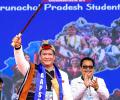
The Supreme Court has agreed to examine a PIL alleging that Arunachal Pradesh Chief Minister Pema Khandu awarded government contracts to his family members. The court has asked the state government to provide details of the beneficiaries and inform if due process was followed. The bench also sought responses from union ministries of home affairs, finance and the Comptroller and Auditor General of India on the issue within five weeks.
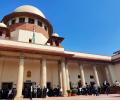
The Supreme Court on Monday agreed to consider listing for urgent hearing the petitions challenging the constitutional validity of the Waqf (Amendment) Act, 2025.
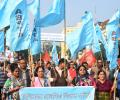
The Supreme Court of India has invalidated the appointment of 25,753 teachers and other staff in West Bengal's state-run and state-aided schools, deeming the selection process "vitiated and tainted." The court ordered the state government to conduct a fresh selection process within three months. The decision comes after a Calcutta High Court verdict in April 2024, which also annulled the appointments. The apex court, while upholding the high court's order, made some modifications, including exempting disabled employees from returning their salaries. The case stemmed from alleged irregularities in the 2016 recruitment process by the West Bengal School Service Commission (SSC), involving OMR sheet tampering and rank-jumping. The Supreme Court had previously termed it a "systemic fraud." Former West Bengal education minister Partha Chatterjee and Trinamool Congress MLAs Manik Bhattacharya and Jiban Krishna Saha are among the accused being investigated in the recruitment scam.
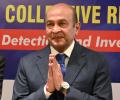
The Supreme Court addressed concerns about misinformation spreading related to an incident involving Delhi High Court judge Justice Yashwant Varma. The court clarified that the proposal to transfer Justice Varma to Allahabad High Court was independent of an internal investigation into the discovery of a large sum of cash at his residence following a fire. The Delhi High Court Chief Justice is conducting the investigation and will submit a report to the Chief Justice of India today.

He also said "forward-looking" policies and judgements were needed to ensure that the benefits of social welfare measures actually reach the citizens.

A three-judge Supreme Court bench will hear petitions challenging the constitutional validity of the Waqf (Amendment) Act, 2025, on April 16. The petitions, including those by politicians and the All India Muslim Personal Law Board (AIMPLB) and Jamiat Ulama-i-Hind, were filed in the top court challenging the validity of the newly-enacted law. The Centre has filed a caveat in the apex court, seeking a hearing before any order is passed.

Senior-most Supreme Court judge Sanjiv Khanna on Wednesday recused himself from considering pleas seeking review of the apex court's judgment last year declining legal recognition to same-sex marriage, sources said.
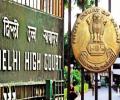
The Supreme Court collegium has initiated an initial inquiry against Delhi High Court judge Justice Yashwant Varma following the alleged discovery of a large stash of cash at his official residence during a fire incident. The collegium has also reportedly recommended Justice Varma's transfer to his parent high court, the Allahabad High Court. The inquiry will involve seeking a report from the Chief Justice of the Delhi High Court on the incident. The controversy surrounding the alleged discovery of cash was first reported by The Times of India. Justice Varma's proposed transfer is subject to the Centre's approval. The amount of cash found is not yet known. Justice Varma, currently heading a division bench dealing with sales tax, GST, company appeals and other appeals, did not hold court on Friday. Delhi High Court Chief Justice D K Upadhyaya expressed shock over the incident. The collegium reportedly received information about the cash discovery from government officials. Some collegium members have called for stricter action against Justice Varma, including seeking his resignation or launching an in-house inquiry. The Supreme Court has an in-house inquiry mechanism to deal with allegations against judges, which involves forming a committee to investigate and, based on the report, take further action. A judge of a constitutional court can only be removed through impeachment by Parliament.
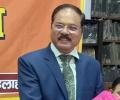
Justice Shekhar Kumar Yadav, an Allahabad High Court judge, is set to appear before the Supreme Court Collegium to explain his controversial statements made at a Vishva Hindu Parishad (VHP) function. The Supreme Court has sought a report from the Allahabad High Court after news reports surfaced regarding Justice Yadav's remarks, which were widely condemned as "hate speech". The judge's statements, made at a VHP event, sparked outrage from various quarters, including opposition leaders and lawyers. The Bar Association of India has also condemned the judge's remarks and called for an apology.
The Supreme Court of India will hear a plea from the mosque management committee challenging an order rejecting its petition in the Krishna Janmabhoomi-Shahi Idgah dispute in Mathura, Uttar Pradesh on January 15. The Allahabad High Court had rejected the mosque committee's plea, stating that the religious character of the Shahi Idgah mosque needed to be determined. The case involves claims that the mosque was built after the demolition of a temple, a claim disputed by the mosque committee. The Supreme Court will now decide on the maintainability of the mosque committee's plea.
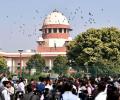
A bench comprising Chief Justice Sanjiv Khanna and Justice Sanjay Kumar also indicated that it may not take up the pending scheduled petitions, heard earlier by a three-judge bench, during the day as it was sitting in a combination of two judges.
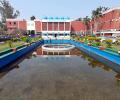
Aligarh Muslim University is not a minority educational institution, Supreme Court's Justice Dipankar Datta said on Friday and noted had it not been a "race against time" he would have articulated better in his dissenting opinion. The judge also flagged a non-exchange of ideas and opinions in a "true democratic spirit" to build a consensus.
The Supreme Court on Monday said the trial of the Manipur ethnic violence cases, probed by the Central Bureau of Investigation, would be conducted in Guwahati, Assam, where it was transferred to earlier.
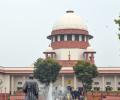
In a significant development, the Supreme Court on Tuesday asked the Election Commission of India to provide details of cases in which it had either removed or reduced the period of disqualification from electoral rolls of leaders post their conviction in criminal cases.
The Allahabad High Court Bar Association has begun an indefinite strike to protest the proposed transfer of Delhi HC judge Yashwant Varma, who is under investigation after a large amount of cash was found at his residence. The Oudh Bar Association (OBA) of the Lucknow bench of the High Court has also condemned the transfer, calling for impeachment proceedings against Justice Varma. Both bar associations are concerned about the impact on public faith in the judiciary and have called for a reconsideration of the transfer decision.
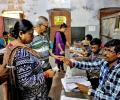
The Supreme Court of India has asked petitioners in two Public Interest Litigations (PILs) to make representations to the Election Commission of India (ECI) regarding their demand for uploading polling booth-wise voter turnout data on the ECI website. The PILs, filed by TMC MP Mahua Moitra and NGO Association for Democratic Reforms, seek a direction for the ECI to upload the data within 48 hours of the conclusion of polling in Lok Sabha and assembly elections. The ECI, represented by senior advocate Maninder Singh, expressed willingness to deliberate on the matter and suggested a meeting with the petitioners to address their concerns. The court has adjourned the hearing to the week of July 28.
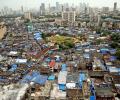
The Supreme Court of India has refused to halt the redevelopment project of Dharavi in Mumbai, allowing the Adani Group to proceed with their project. The court rejected a plea from Seclink Technologies Corporation, the original highest bidder for the project in 2018, which challenged the tender process and the award to Adani Properties Pvt Ltd in 2022. The court directed Adani Properties to make payments through a single bank account and ordered Seclink Technologies to file an affidavit detailing their increased offer for the project. The project work has already commenced, with constructions underway and 2,000 people employed on the site.
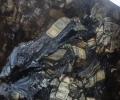
The Supreme Court of India has released an inquiry report into the alleged discovery of a large amount of cash at the residence of Delhi High Court judge Yashwant Varma. The report, which includes photos and videos, was uploaded on the court's website. Chief Justice of India Sanjiv Khanna has formed an in-house committee to investigate the matter and has asked the Delhi High Court Chief Justice to not assign any judicial work to Justice Varma. Justice Varma has denied the allegations, claiming they are part of a conspiracy to frame him. The inquiry report, submitted by the Delhi High Court Chief Justice, has been made public and calls for a deeper probe into the incident. The incident has raised concerns about judicial accountability and has prompted the Congress party to call for strong measures to uphold public trust in the judiciary.
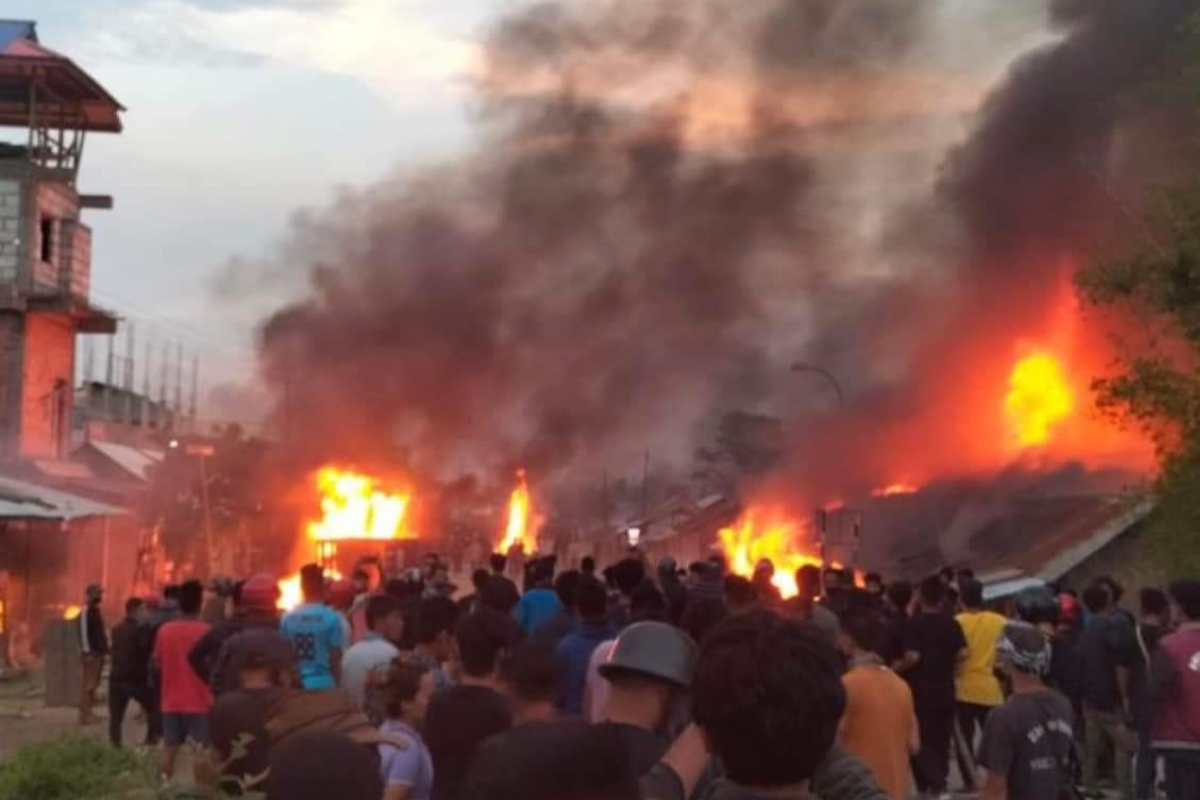
The top court asked the state government to spell out details of its actions taken against the culprits and the encroachers.
A bench of Justices Sanjiv Khanna and Dipankar Datta issued notice to the Centre on a plea filed by an NGO, Association for Democratic Reforms, and listed the matter along with other pending petitions on the issue for hearing in April.
The Supreme Court of India will examine the jurisdiction of the Lokpal, India's anti-corruption ombudsman, in entertaining complaints against sitting high court judges. The court is considering a suo motu proceeding initiated over the Lokpal's January 27 order on the issue. The case involves two complaints filed against a sitting additional judge of a high court, alleging that he influenced a judge of the subordinate judiciary and a judge of the same high court set to deal with a suit filed against the complainant by a private company.
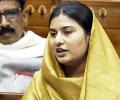
Samajwadi Party leader and Kairana MP Iqra Choudhary has moved the Supreme Court seeking effective implementation of the Places of Worship (Special Provisions) Act, 1991. This move comes amidst several petitions challenging the law's validity, including those filed by the Akhil Bhartiya Sant Samiti and lawyer Ashwini Upadhyay. The Supreme Court, in December 2022, had restrained all courts from examining fresh suits and passing interim orders in pending cases seeking to reclaim religious places. The Act aims to maintain the religious character of places of worship as they existed on August 15, 1947, but the dispute relating to Ram Janmabhoomi-Babri Masjid at Ayodhya was kept out of its purview. The court has listed Choudhary's plea with other pending pleas for February 17.

The Supreme Court on Friday directed a Sambhal trial court to temporarily halt proceedings in the case over the Mughal-era Shahi Jama Masjid and its survey at Chandausi while directing the UP government to maintain peace and harmony in the violence-hit town.

The Supreme Court of India has extended its stay on a court-monitored survey of the Shahi Idgah Mosque complex in Mathura, which is located adjacent to the Krishna Janmabhoomi temple. The court deferred the hearing on a plea against the survey to April 1, while the interim order staying the survey will continue to operate. The Hindu side claims that the mosque complex holds signs of a temple that once existed at the site, while the Muslim side contends that the lawsuits filed by the Hindu litigants violate the Places of Worship (Special Provisions) Act of 1991.
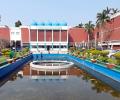
The Supreme Court on Friday deferred the question of Aligarh Muslim University's minority status to a fresh bench and overruled the 1967 judgment that said the university cannot be considered a minority institution since it was created by a central law.
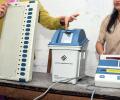
The Supreme Court of India has sought a response from the Election Commission of India (ECI) regarding pleas seeking verification of burnt memory and symbol loading units in Electronic Voting Machines (EVMs). The court directed the ECI to refrain from erasing or reloading data during the verification process and to explain the procedure adopted for verification. The bench also expressed concerns over the high cost of verification and directed the ECI to reduce the fee. The court's directive comes following its previous judgement where it allowed aggrieved candidates to seek verification of EVMs.
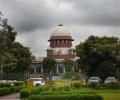
Commencing hearing on pleas challenging the constitutionality of the Places of Worship Act, 1991, the Supreme Court asked the Centre to reply to cross-pleas against or seeking implementation of statute.

According to the cause list of July 10 uploaded on the apex court website, a five-judge bench headed by Chief Justice DY Chandrachud would consider in chambers the pleas seeking review of the October 17 last year verdict.

There was no occasion for the woman to interact directly with the CJI, notes Supreme Court Secretary General S S Kalgaonkar.
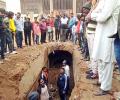
The Supreme Court of India has ordered a status quo on a private well located near the entrance of the Sambhal Jama Masjid, prohibiting any action regarding the well without its permission. The order came in response to a plea by the mosque's management committee, which challenged a lower court order that allowed a survey of the mosque, citing concerns over violence and loss of life during previous surveys. The court also instructed the authorities to file a status report within two weeks.

The move came hours after Justice Khanna had told Singhvi that Kejriwal's petition against his arrest would be heard by a three-judge bench during the day.

The NGO challenges the validity of a provision of the Chief Election Commissioner and Other Election Commissioners Act, 2023.

A bench comprising Justices Sanjiv Khanna, M M Sundresh and Bela M Trivedi will hear the plea of jailed JMM leader at 10.30 am on Friday.
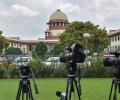
Chief Justice of India Ranjan Gogoi will administer the oath of office to the two judges on Friday, an official circular said.
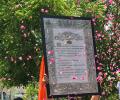
The Supreme Court on Friday observed the 1976 amendment to the Constitution adding terms 'socialist', 'secular' and 'integrity' to the Preamble underwent judicial reviews and it cannot say whatever Parliament did during the emergency period was all nullity.
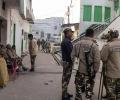
A four-member team from the Archaeological Survey of India (ASI) conducted a survey of the recently-discovered Shri Kartik Mahadev temple, five pilgrimage sites, and 19 wells in Sambhal, Uttar Pradesh, India. The survey followed the discovery of three damaged idols inside a well of the Bhasma Shankar temple, which was reopened after being shut for 46 years. The Shri Kartik Mahadev temple, also known as the Bhasma Shankar temple, was reopened on December 13 after authorities found the covered structure during an anti-encroachment drive. The temple houses an idol of Lord Hanuman and a Shivling and had remained locked since 1978. The district administration has requested carbon dating of the temple, including the well, from the ASI. Meanwhile, the Supreme Court has restrained courts across India from entertaining new lawsuits or passing any orders in pending ones seeking to reclaim religious places, especially mosques and dargahs, until further notice. This action halts proceedings in approximately 18 lawsuits filed by Hindu parties seeking surveys to determine the original religious character of 10 mosques, including the Gyanvapi at Varanasi, the Shahi Idgah Masjid at Mathura, and the Shahi Jama Masjid at Sambhal, where four individuals died in clashes. The Supreme Court will examine the legality, scope, and boundaries of the Places of Worship (Special Provisions) Act, 1991, which prohibits the conversion of places of worship and ensures the preservation of their religious character as it existed on August 15, 1947.

A voter's right to know is 'far too important' in democracy than the privacy of a donor, Supreme Court judge Justice Sanjiv Khanna said on Thursday as the apex court scrapped the 2018 electoral bond scheme for funding political parties.
 © 2026 Rediff.com - Advertise with us - Disclaimer - Privacy Policy - Sitemap - Feedback - About us - Terms of use - Grievances